

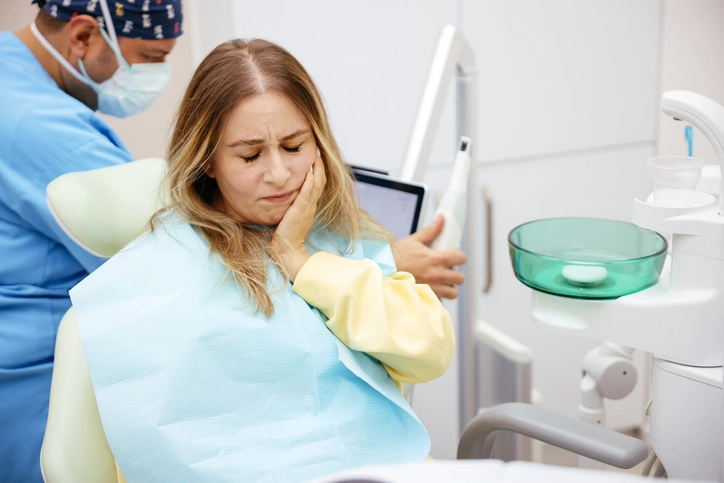

Dental emergencies involve severe pain or structural damage to your teeth, and they typically require prompt professional treatment to prevent further complications. Patients seek emergency dental care when they experience sudden trauma, severe infections, or unbearable discomfort. Common conditions requiring urgent attention include knocked-out teeth and severe dental abscesses.
Defining Emergency Care
Unexpected oral injuries occur, and emergency dental care provides immediate relief and helps prevent permanent damage. A prompt response minimizes the risk of tooth loss. Because time dictates the success of many treatments, patients must seek help immediately after an injury.
Treating Knocked-out Teeth
A knocked-out tooth presents a serious situation, but immediate action can save your natural teeth. Dentists can reimplant the tooth, after which they will splint it to adjacent teeth for stability. To increase the chance of successful reimplantation, follow these steps:
- Pick up the tooth by the crown.
- Rinse it gently with water.
- Gently place it back in the socket or in a container of milk.
If you follow these steps, the reattachment process has a higher success rate. The dentist will evaluate the root structure, and they will monitor the healing process over several weeks.
Managing Dental Abscesses
A dental abscess is a painful infection at the root of a tooth. It requires urgent medical intervention. The infection can spread to your jaw or neck if left untreated. There are different types of dental abscesses. Gingival abscesses develop in the gums, while periapical abscesses form on the tip of the tooth root. Periodontal abscesses initially occur in the bones and tissues that support the teeth from below.
Dentists will drain the abscess to relieve the pressure, and they prescribe antibiotics to clear the infection. To resolve the underlying issue, a root canal therapy cleans out the infected tissue. The dentist removes the compromised pulp, and they seal the tooth to prevent future decay. Once the procedure stops the pain, you can resume your normal routine.
Repairing Broken Teeth
A cracked or broken tooth exposes sensitive internal nerves, and it creates sharp pain when you bite down. Minor chips might only need a simple filling. Severe breaks may involve more extensive restorations, so the dentist will place a dental crown over the damaged tooth.
The crown covers the entire visible portion of the tooth, and it provides structural support for daily chewing. You can regain full functionality because the restoration matches your natural bite. Your dentist can match the color of the crown to your surrounding teeth.
Some benefits of using crowns for dental restoration include the following:
- Durable surface restores chewing stability
- Minimal reshaping of the natural tooth
- Protective effect on the vulnerable covered tooth
- Last up to 15 years with proper care and maintenance
Find Nearby Emergency Dental Care
Dental emergencies range from knocked-out teeth to painful abscesses and severe fractures. Prompt treatment addresses the immediate pain, and it protects your long-term oral health. Dentists repair damaged teeth and treat infections. If you want to learn more about emergency dental care, consult a dental provider near you.
