

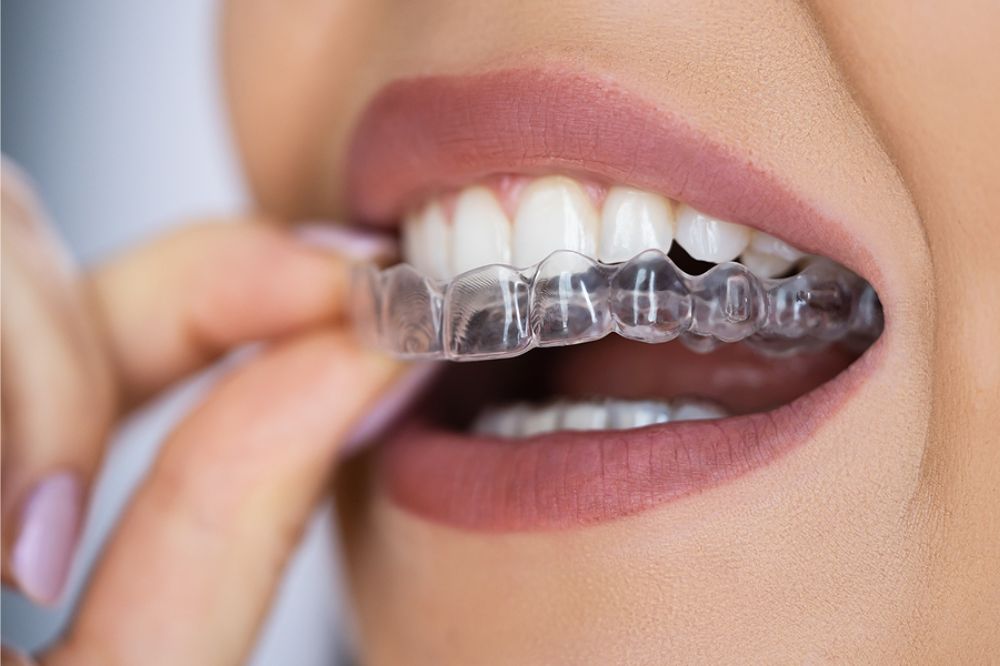

Orthodontic treatments correct misaligned teeth, and they improve overall oral health. Traditional braces use metal brackets to move teeth into place. Invisalign offers an alternative approach by using clear plastic aligners. Here is more information on how Invisalign works:
What Is Invisalign?
Invisalign is a brand of clear aligners meant to correct orthodontic issues. These devices consist of transparent, medical-grade materials that are practically invisible when worn. Patients receive a series of custom-made trays over the course of their treatment. Each tray in the series represents a slightly different stage of tooth alignment, and this gradual progression shifts the teeth incrementally until they reach the final position.
How Does It Work?
The aligners apply controlled pressure to specific teeth, which stimulates bone remodeling in the jaw. This process involves breaking down bone tissue on one side of the tooth root and building new bone on the other. This secures the tooth in its new position. Patients experience improved oral alignment, enhancing daily function and aesthetics.
What Does It Treat?
Orthodontists utilize this system to address various types of malocclusion. A malocclusion refers to a misalignment of the teeth or an incorrect relation between the dental arches. The aligners treat crowding, and they close unwanted gaps between teeth. Overbites occur when the upper teeth overlap the lower teeth excessively.
Underbites manifest when the lower front teeth protrude past the upper front teeth, while crossbites happen when some upper teeth sit inside the lower teeth upon biting down. Open bites present a gap between the upper and lower teeth when the jaw is closed. The clear aligners can correct these bite irregularities, improving oral health.
What Does the Process Involve?
The procedure begins with a comprehensive dental consultation and examination. A dentist may take digital scans and X-rays of the patient’s mouth. These digital records generate a precise 3D model of the teeth, and the software simulates the projected tooth movements. The dental laboratory uses this simulation to manufacture the physical aligners.
Patients wear the aligners every day to achieve the desired results. They remove the trays to eat meals and to perform routine oral hygiene tasks. The individual switches to a new set of aligners approximately every couple of weeks. Regular dental check-ups may occur every few weeks, and the dentist monitors the progress during these visits.
After completing the initial series of aligners, patients may require refinement trays to perfect the final tooth positions. The refinement phase addresses stubborn teeth, and it corrects minor bite discrepancies. Once the treatment ends, the patient transitions to wearing a retainer. This device prevents the teeth from shifting back.
What Are the Benefits?
Clear aligners present several distinct advantages over conventional metal braces. The transparent material provides aesthetic appeal, and some adult patients prefer this inconspicuous look. The trays do not contain metal brackets or wires that may irritate the soft tissues of the mouth. Being able to remove the device allows patients to maintain normal eating habits and brush and floss without obstruction.
The lack of dietary restrictions is beneficial to some individuals. Metal braces require patients to avoid sticky or hard foods, but clear aligners eliminate this requirement. Patients simply remove the device before consuming snacks or meals. This flexibility may improve the overall treatment experience, promoting better compliance with the prescribed wear schedule.
Consult a Dentist Today
Invisalign offers a modern approach to correcting dental misalignments using transparent trays. The system relies on custom-fabricated aligners to apply gradual pressure, and this pressure shifts teeth into their designated positions. Schedule an initial consultation with a certified provider to explore this orthodontic therapy.
