

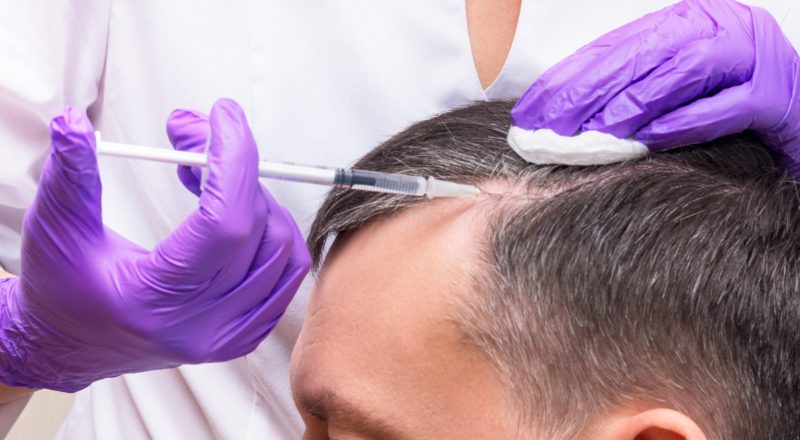

Platelet-rich plasma (PRP) for hair loss is a non-surgical treatment used in hair restoration. The process involves drawing a small amount of blood and separating the plasma to concentrate platelets. This concentrated solution is then injected into the scalp to target hair follicles. PRP is used in clinical settings as a method to support follicle activity and address hair thinning patterns. Here is more information on PRP for Hair Loss:
Understanding the PRP Process
The process of PRP for hair loss begins with a standard blood draw performed in a clinical setting. The collected sample is placed into a centrifuge, which separates the different components of the blood. This step isolates the plasma that contains a higher concentration of growth factors. The processed sample is then prepared for use in treatment.
Once the plasma is ready, it is used in a controlled medical procedure. The preparation stage supports the concentrated solution is available for targeted application. The process is completed under clinical supervision to maintain proper handling of the sample. Each step is performed to isolate platelet-rich plasma for therapeutic use.
Administering the Plasma Injections
The PRP injection phase involves targeted application to areas of the scalp experiencing thinning. A trained provider administers the concentrated platelet-rich plasma using small, precise injections. The procedure is performed in a clinical setting to support accurate placement within the treatment area.
The injected plasma contains concentrated growth factors derived from the patient’s own blood. These growth factors interact with surrounding tissue after placement in the scalp. The goal of the process is to deliver PRP directly to follicles in areas of reduced density.
PRP therapy was first used in medical fields such as sports medicine to support tissue repair. It is now also used in aesthetic and dermatologic treatments, including hair restoration and skin-related procedures. The method is applied in non-surgical treatment plans under professional supervision.
Scheduling the Required Sessions
PRP hair restoration is typically performed as a series of initial treatments spaced several weeks apart. A provider usually recommends three sessions scheduled four to six weeks apart, followed by an evaluation of progress after completion of the series. Results vary based on individual hair growth cycles and response to treatment. The structured schedule allows the provider to monitor changes in hair density over time.
After the initial series, maintenance treatments are commonly scheduled every six to twelve months. These follow-up sessions are used to support ongoing hair growth activity and address continued thinning patterns. Treatment frequency is adjusted based on clinical evaluation and individual response. Regular follow-up appointments help maintain results achieved during the initial treatment phase.
Combining Additional Medical Therapies
Specialists evaluate individual treatment goals when determining appropriate hair restoration approaches. PRP therapy may be combined with topical treatments such as minoxidil or oral medications like finasteride, depending on clinical assessment. These therapies are used together in some treatment plans to support overall hair growth outcomes. Treatment selection is based on provider evaluation and individual response to therapy.
Schedule Your Consultation for PRP for Hair Loss
Hair loss affects millions of individuals in the United States and is addressed through a range of medical treatment options. PRP therapy is one method used to support hair follicle activity through concentrated growth factors. Treatment plans are developed based on clinical evaluation and individual hair restoration goals. Schedule a consultation with a qualified provider to learn more about available hair restoration options.
