

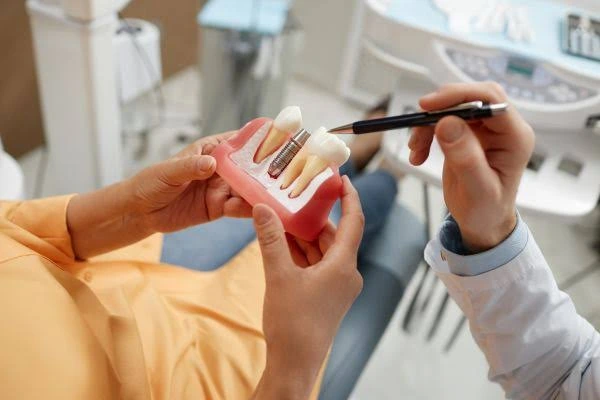

A dental implant consultation is a two-way interview where the surgeon checks bone and health, and the patient considers the proposed plan and its costs.
Treat the appointment like a screening
Most people walk in ready to answer questions. It helps to prepare a few questions too. The surgeon will look at teeth and medical history. The patient can also assess the surgeon’s experience and how clearly the options are explained. Notes and past X-rays can be useful if they are available. Short answers are fine at first.
Does the office explain trade-offs in plain terms? Does the timeline sound realistic for the mouth being examined? There should be time to consider the plan before agreeing to surgery.
Ask who will place the implant and how often they do it
Start with background. Ask if the surgeon is board certified in oral surgery and how much of the practice is devoted to implant work. Ask about experience with cases similar to the one being discussed, not just a total procedure count. Training, case selection, and follow-up systems also belong in the conversation. It’s surgery, so direct questions are fair.
Ask for practice-specific results. National averages don’t say much about a single office. Published success rates are broad figures, not a prediction for an individual patient. Ask what the office means by success and over what follow-up period it measures results. Ask how the office tracks healing issues and early failures.
Ask which implant system and planning method are proposed and why they suit the case. If digital guidance is discussed, ask what it contributes and what its limits are. Implant materials can also be part of the conversation. Share any history of material reactions with the clinician rather than selecting a material based on an advertisement or assuming one option is appropriate for every patient.
Take notes on the answers and compare them later.
Questions about training, case planning, and follow-up are just as relevant for adults considering dental implants with Dr. Trevisani.
Ask what the 3D scan shows
Ask if a CBCT scan is part of the consultation. This type of 3D imaging can help the clinician assess the available bone and nearby anatomy, including nerves and sinus space. Ask to look at it together. A picture of thin bone is easier to grasp than a verbal warning that there isn’t enough bone. A list of current medications and health issues can help inform that discussion.
That view drives the next questions. Is bone grafting needed before a post can hold? For an upper molar that has been missing for years, the surgeon can explain whether a sinus lift is needed to create room. An extraction or gum treatment may also be needed first. Each additional procedure adds time and cost. Ask what each step adds and in what order the steps happen.
Ask how the process works from post to final tooth
An implant has three parts. There is the post in the bone and the abutment that connects to it. The crown is the part that shows. Osseointegration is the phase where bone fuses to the post. That fusion is what gives the implant its hold. Healing time varies by person and site, so the surgeon should explain the expected range for the proposed treatment.
Ask about the temporary tooth. Many patients get a provisional while bone heals. Find out what kind of temporary restoration is planned and what it can and can’t handle. The office should explain what happens if it chips or feels loose. Cleaning around implants is another point to discuss. There should be a clear process for getting help with problems.
Ask how the final tooth is made to fit. Find out who designs the crown and how color and shape are matched. For a span of missing teeth, the discussion may include an implant-anchored bridge. For a full row, ask about full-arch options supported by several implants. Ask how bite alignment is checked too. Occlusion is how upper and lower teeth meet, and a high spot can quickly become sore.
Ask what it costs in full and how comfort is handled
Ask for a total cost breakdown in writing. It should list imaging and surgical fees on separate lines. It should also list anesthesia and implant parts on separate lines. Then ask if the fee includes the abutment and final crown, or if restorative fees are billed separately. That split is where surprise bills often hide.
Ask about warranty terms and financing in the same conversation. Is there any written policy if an implant doesn’t integrate? The policy should explain what it covers and for how long. Many offices have payment plans and work with third-party financing. Monthly terms and approval steps belong in the discussion before any commitment.
Don’t skip comfort questions. Dental anxiety keeps many people from starting. Ask what sedation choices the practice has and who monitors sedation during surgery. Ask what the first few days often feel like and who to call with concerns. A clear after-hours contact and a written care sheet matter more than vague reassurance.
Comparing two offices can help with the decision. A useful dental implant consultation in Orlando and Central Florida explains the proposed plan, its alternatives, the estimated costs, and any further assessment needed. There should be no pressure to decide on the spot.
