

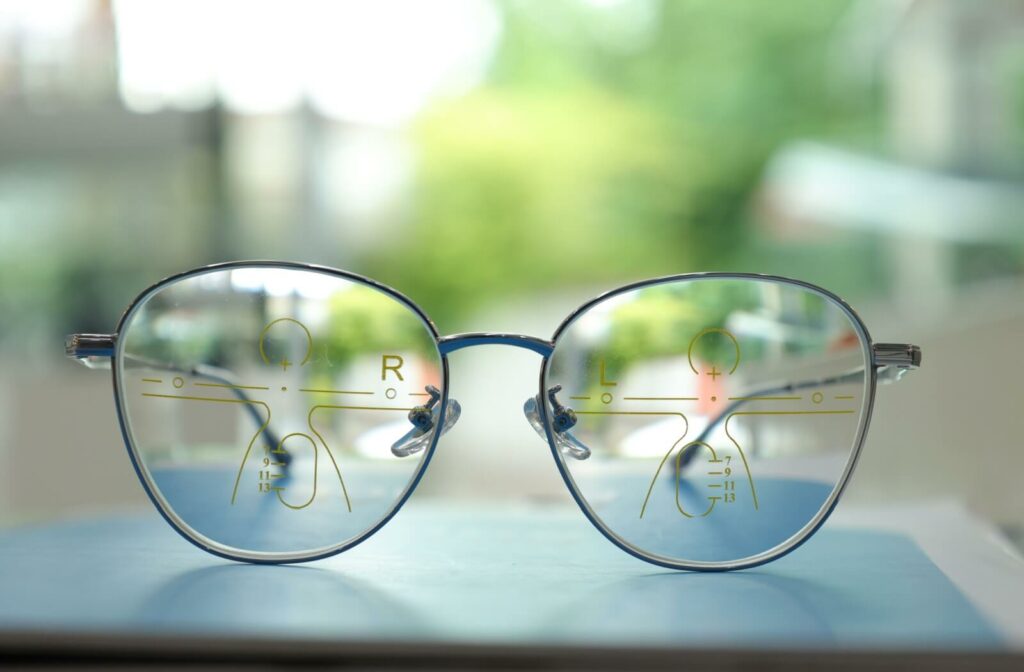

Eye glasses can support clearer vision, improve daily comfort, and help address different vision needs. Progressive lenses are designed to provide multiple vision corrections in a single pair, allowing users to see clearly at near, middle, and far distances without switching between glasses. Here is a closer look at the benefits of progressive lenses in eye glasses:
Understanding Vision Needs
Patients experience a wide range of visual challenges throughout their adult lives. Eye doctors evaluate these conditions during a standard exam, and they prescribe eye glasses based on the results. While some people only need single-vision lenses, others require targeted correction for multiple focal points. Here are some conditions patients may have:
- Myopia: Nearsighted individuals struggle to see distant objects clearly.
- Hyperopia: Farsightedness makes nearby text appear blurry to the patient.
- Presbyopia: Aging eyes lose their natural ability to focus on close tasks.
- Astigmatism: An irregularly shaped cornea distorts vision at all distances.
Identifying these conditions helps doctors select the right optical lenses. A proper diagnosis leads to better prescription glasses, and patients can achieve clearer vision in all environments.
Improving Daily Convenience
Progressive lenses eliminate the constant need to switch between different pairs of eye glasses. Individuals can read a printed book up close, and they can instantly look up to see a television across the room. While older bifocals have a distinct physical line, progressive lenses feature a completely smooth surface. The uninterrupted lens surface looks like standard single-vision eyewear, and they also provide a wide field of view.
The smooth optical design improves physical comfort during everyday activities. Individuals wear one pair of prescription glasses throughout the entire day; they do not need to carry a separate reading pair in their pockets. Several daily tasks require rapid shifts in visual focus. Whenever individuals perform common actions, progressive lenses effortlessly adapt to their viewing angles.
Supporting Clearer Transitions
Standard bifocal lenses create an abrupt optical jump between near and far vision. Progressive lenses blend the different prescription zones together smoothly, and they create a natural viewing experience for the user. When individuals move their eyes downward to read, the lens power gradually increases without a sudden shift.
The gradual change mimics natural human vision perfectly. The eyes adjust to the different focal points without physical strain, and the brain processes the incoming images smoothly. Although the initial adaptation period takes a few days, the resulting visual transitions become completely normal over time.
Choosing the Right Eye Glasses
Selecting the appropriate frames and lenses requires careful physical measurement. Opticians guide patients through the customized fitting process, and they make sure the final product functions correctly for the individual. Here are some functional factors to pay attention to when choosing new eye glasses:
- Frame size: The selected frame must be tall enough to properly accommodate all three viewing zones.
- Lens material: Lighter optical materials may enhance the wearer’s daily physical comfort.
- Measurements: Precise pupil placement supports accurate focal transitions across the lens surface.
- Coatings: Anti-reflective chemical layers reduce harsh glare from digital screens.
These elements contribute to a successful vision correction strategy.
Book Your Eye Glasses Appointment
Progressive lenses provide a versatile optical solution for complex vision requirements. These prescription glasses combine multiple focal lengths into a single lens, and they eliminate annoying physical lines. Contact a reputable eye care practice near you to book your appointment for eye glasses today.
