

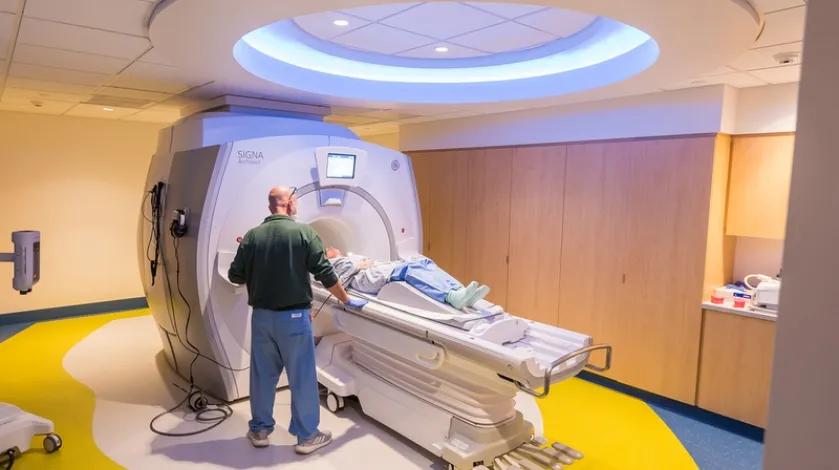

An MRI is an imaging tool that helps medical providers evaluate soft tissues, organs, joints, and other internal structures. It is often recommended when symptoms need further investigation or when other imaging tests do not provide enough information. Here are some common reasons a provider may recommend an MRI:
Symptom Evaluation
Unexplained pain requires a thorough medical evaluation; if a patient experiences persistent headaches, physicians often recommend a scan. The images show internal structures clearly, and they highlight irregular tissues. Blood tests may provide some answers, but scans offer more details, and they reveal the exact location of a physical problem.
Whenever symptoms persist, healthcare professionals contemplate various diagnostic tools to identify the root cause. An MRI creates high-resolution images, and these visuals guide the diagnosis. Neurological symptoms demand precise investigation. If a person experiences sudden dizziness, a physician may order a brain scan to identify nerve issues and detect changes in brain tissue.
Injury and Structural Assessment
When an injury occurs, an MRI evaluates the structural changes. Doctors review these images, and they assess the severity of the damage. Here are some situations where the structural review that an MRI provides is fundamental:
- Muscle tears: The scan identifies the exact location and size of torn muscle fibers.
- Ligament sprains: Imaging shows the stretching or tearing of joint ligaments in the knees and ankles.
- Joint issues: The pictures reveal cartilage wear within the shoulder or hip joints.
- Spinal changes: Doctors identify herniated discs and compressed nerves along the spinal column.
Structural reviews are key for recovery planning. The medical team identifies the damage and outlines the next steps. If the injury requires surgery, the scan provides a roadmap, and it helps the surgeon prepare.
Condition and Treatment Monitoring
Long-term medical conditions require consistent observation. Whenever a patient undergoes therapy, doctors monitor the patient’s progress over time. An MRI compares current tissue states with prior scans, highlighting physical changes. Although clinical visits provide useful data, imaging reveals the internal reality, and this provides a precise assessment of the condition.
Tracking tumor size is a fundamental task; if a mass shrinks during treatment, the current therapy is likely working. Doctors check for new growths, and they adjust medications accordingly. Before a doctor changes a prescription, they review the latest scan, and this helps them make sure the new plan aligns with the patient.
Treatment Support
Accurate data often leads to effective medical care. When physicians review an MRI, they formulate targeted treatment strategies. The scan removes guesswork, and it establishes a factual baseline. Here are ways an MRI provides treatment support:
- Surgical planning: Surgeons map out the operation area precisely before making an incision.
- Medication adjustment: Doctors change drug dosages based on the visible tissue response.
- Therapy selection: Medical teams choose between physical therapy and invasive procedures.
- Recovery tracking: Specialists monitor internal healing progress at specific intervals.
Before doctors finalize a plan, they discuss the scan results with the patient. While recovery takes time, accurate imaging speeds up initial decisions and sets the patient on the right track.
Schedule Your MRI Today
Accurate imaging plays a significant role in diagnosing conditions, planning treatments, and monitoring recovery progress. MRI scans help healthcare providers make informed decisions and design personalized recovery plans tailored to each patient’s needs. The precision accelerates the initial steps of treatment and improves overall outcomes. Contact a reputable medical imaging center near you to schedule your MRI today.
