

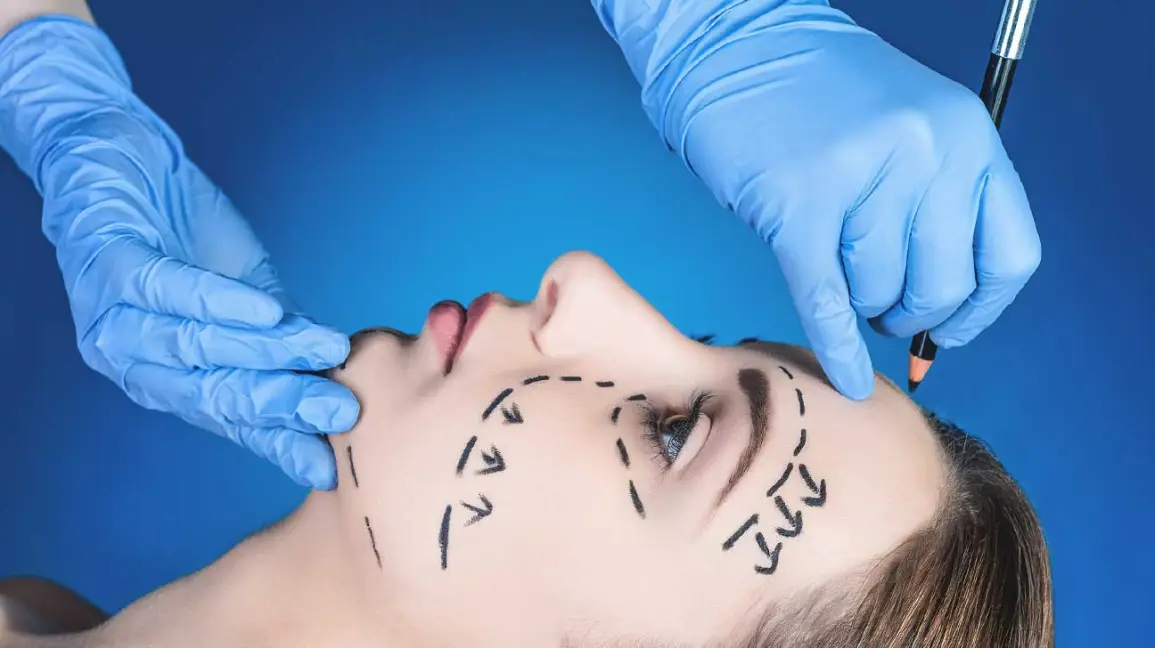

Facial plastic surgery encompasses procedures that alter, restore, or reshape the structures of the face and neck. Reconstructive surgery aims to repair physical deformities caused by injuries or medical conditions, helping to restore functionality and improve quality of life. Cosmetic surgery focuses on enhancing appearance by refining or reshaping features. Both fields of plastic surgery require a deep understanding of anatomy. Here’s more information about areas of the face that can undergo plastic surgery:
Brows and Eyes
The upper third of the face significantly affects a person’s overall facial functions and expressions. There are many facial plastic surgery options available, offering various ways to rejuvenate and lift the face. A brow lift targets the forehead and eyebrow region. This procedure adjusts the soft tissue, muscle, and skin of the upper face to elevate a low or drooping brow. Surgeons use various techniques, including endoscopic or coronal approaches, depending on the individual’s anatomical needs. Many people choose this option to address drooping brows, but it can also smooth horizontal creases across the forehead.
Eyelid surgery is clinically known as a blepharoplasty, and surgeons can perform this procedure on:
- Upper Eyelids
- Lower Eyelids
- Both Eyelids Simultaneously
Upper blepharoplasty addresses skin that rests near the eyelashes, while lower blepharoplasty focuses on adjusting the tissue beneath the eye. This operation typically involves the careful removal or repositioning of excess skin, underlying muscle, and localized fat deposits.
Cheeks
The mid-face region is frequently surgically adjusted to alter overall facial contours and proportions. Two procedures that address the cheek area are buccal fat removal and cheek reduction. Buccal fat removal involves the extraction of the buccal fat pads, which are naturally occurring masses of fat located deep within the lower cheeks. Removing this tissue creates a more sculpted appearance in the mid-face region. A cheek reduction addresses the underlying facial skeleton. Surgeons modify the malar bones to reduce their outward prominence, resulting in a narrower facial profile.
Nose and Chin
A rhinoplasty alters the bone and cartilage framework of the nose to modify its size, shape, angle, or overall proportions. Surgeons typically use either an open approach, which involves a small incision between the nostrils, or a closed approach, where all incisions remain inside the nose. People pursue rhinoplasties to adjust the nasal profile, but surgeons also perform them to correct internal structural abnormalities.
The lower face helps establish overall facial and profile balance. Chin augmentations are surgical procedures designed to enhance the projection and contour of the chin. One way surgeons achieve this enhancement is by precisely placing chin implants. These implants are commonly porous polyethylene or silicone, shaped to fit over the patient’s existing jawbone structure. Once positioned, they create a more defined jawline.
Learn About Facial Plastic Surgery
The face involves a network of nerves, blood vessels, and tissues, and before deciding to alter your facial structure, meet with the surgeon to assess your facial anatomy, discuss your goals, and outline surgical options. Plastic surgeons know specialized surgical techniques and understand facial anatomy, which allows them to safely perform a range of procedures. Contact a plastic surgery facility today to learn more about realistic expectations and your options.
