

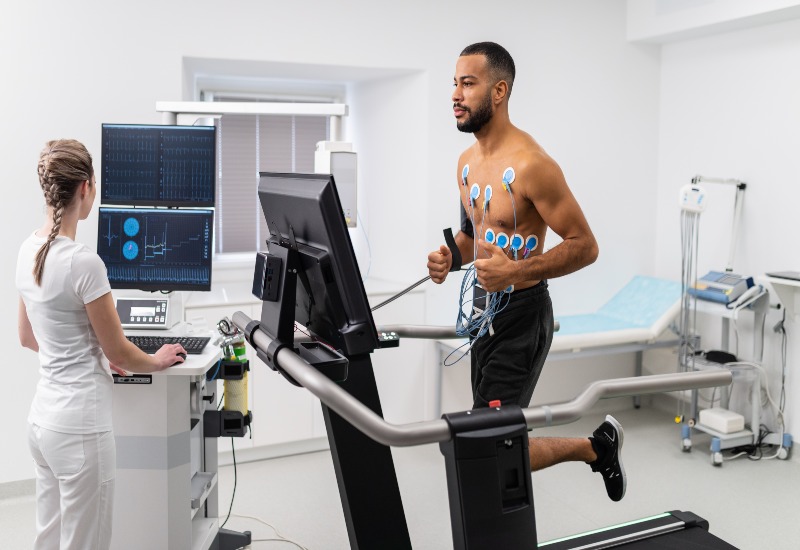

Exercise stress tests measure your baseline heart function. They track cardiovascular performance, and doctors use this valuable medical data. Medical professionals use these results for specific treatment planning. When you exercise, this reveals potential functional issues.
What Is the Process?
The exercise stress test monitors your heart rate and rhythm as your activity level increases. The process is manageable for all fitness levels. Aspects of the test are:
- You walk on a treadmill or pedal a stationary bike during the test.
- Medical staff monitors your blood pressure before, during, and after exercise.
- Technicians attach electrodes to your chest to record your heart’s electrical activity.
- The machine captures and records your vital signs at every stage.
- Trained professionals watch for significant changes and provide support if symptoms arise.
While the equipment gathers data, you are encouraged to communicate your comfort level. If you experience symptoms such as chest discomfort, fatigue, or dizziness, medical staff are present and may stop the test. They address concerns as they arise, and they support you during the procedure. The procedure requires little preparation. You receive clear instructions before your appointment, and they discuss medications and food intake.
How Does It Work?
Preventive cardiology commonly uses these tests for detailed cardiovascular information. The exercise stress test is part of your ongoing assessment. Sometimes, your doctor may recommend a nuclear stress test for more imaging. This test uses special imaging and a small radioactive tracer, which travels through your blood as your heart responds to exercise. This process helps providers monitor blood movement through your heart and vessels. If certain vessels narrow or block blood flow, the tracer marks these regions. Imaging shows where circulation changes, so your provider tracks your heart health.
Cameras record images of your heart at rest and after exercise. Physicians review these images to see how blood moves during activity. If blockages restrict blood flow, some areas show reduced activity or appear as “cold spots.” These findings give your care team information about possible changes in your coronary arteries. Providers develop strategies, and they offer guidance about your risk factors.
How Are Conditions Supported?
This data helps build your personalized care plan, and it gives your team useful information for decisions. Doctors use exercise stress tests to monitor heart failure by evaluating how your heart pumps. Your provider adjusts medications or adds other therapies, based on your successes. Cholesterol control is part of managing heart disease. If your cholesterol is high, stress tests help observe how your treatment affects blood flow. Your provider reviews this. They decide if changes to medication or lifestyle would help. Regular testing finds changes in your condition, and it lets your care plan respond to your progress. As your heart changes, these tests offer updated insights at each stage.
Schedule Your Exercise Stress Test
You need accurate health information, and cardiovascular testing provides clear diagnostic answers. Talk to your healthcare provider today. While heart disease requires lifelong care, medical guidance helps. Providers review your current status, and they recommend appropriate testing intervals. As your condition evolves, proactive management helps preserve your health. Regular evaluations track your physical capabilities.
