

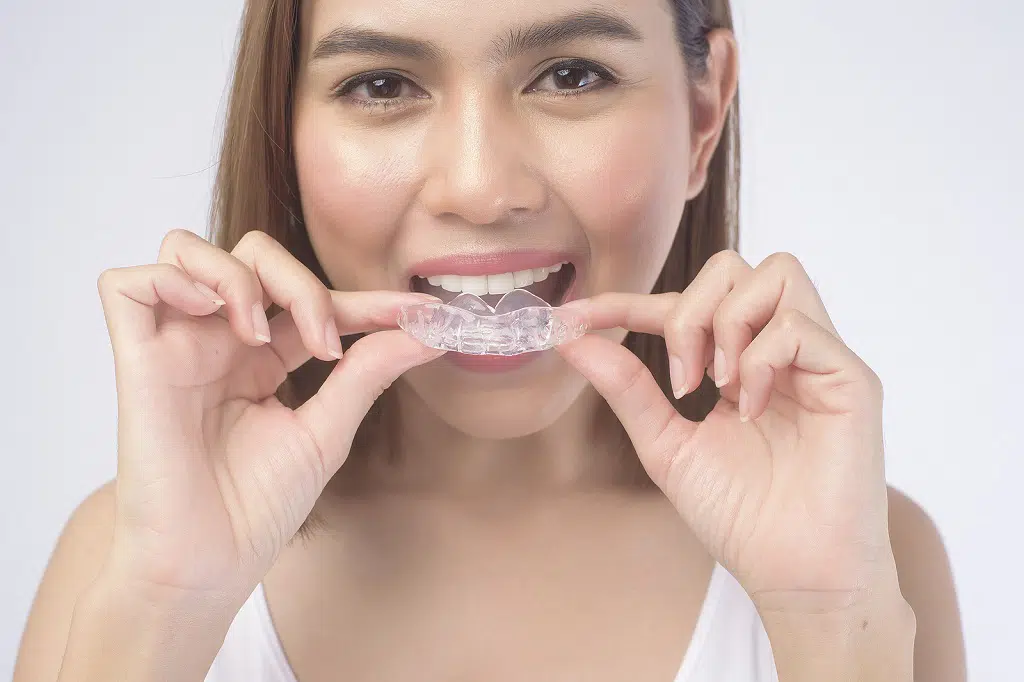

Advances in Invisalign technology continue to improve the way patients approach orthodontic treatment. Modern Invisalign systems offer greater precision and improved comfort. Understanding these innovations can help patients see how Invisalign has evolved for achieving straighter teeth with a discreet appearance. Here are some of the latest innovations in Invisalign technology:
Advanced Materials and Comfort
Invisalign aligners use a patented plastic material called SmartTrack. This special formula applies a gentle force throughout the day, and it moves teeth accurately. The material is flexible, making the clear aligners fit closely against the gum line.
Safety is a fundamental part of the design process. The SmartTrack material contains no latex or BPA, and it holds approval from the FDA for medical use. The smooth surface of the plastic protects the inner cheeks. Metal brackets often cause small cuts, but the clear trays eliminate this painful problem. When the dentist gives you a new set of trays, you avoid the sharp edges found on traditional braces.
Broader Alignment Correction
Dentists treat a wide range of bite issues using modern Invisalign aligners. Computer software calculates precise forces, allowing doctors to treat complex dental conditions. Current Invisalign systems handle the following alignment issues:
- Crowding: The aligners create space for teeth that sit too close together.
- Overbites: The system moves the upper teeth back to align with the lower jaw.
- Underbites: The doctor shifts the lower jaw backward so it rests properly behind the top teeth.
- Crossbites: The trays adjust specific teeth that sit inside or outside the proper dental arch.
- Gaps: The plastic trays push teeth closer together to close visible spaces.
These corrections happen gradually over the course of the treatment plan. A patient receives a new set of trays every few weeks, and the teeth shift closer to their final targets. When the teeth reach their final positions, the patient achieves a properly aligned bite.
Digital Planning Precision
Doctors begin the process by taking a digital scan of the mouth; the wand captures hundreds of pictures per second. After the scan finishes, the dentist examines the teeth on a monitor. Invisalign software gives the doctor control over every single tooth. The dentist maps out the exact movements, and the computer shows a visual timeline of the treatment.
The digital files transfer quickly to the manufacturing lab, and the technicians begin printing the custom trays right away. While the printing process takes a few days, the fast digital transfer speeds up the overall delivery time. If the dentist notices an issue in the simulation, they adjust the digital plan before ordering the physical trays.
Flexible Patient Experience
The daily routine of wearing these trays fits easily into a normal schedule. Patients maintain their regular eating habits, and they keep their teeth clean without special tools. Here are key benefits patients can experience during their treatment:
- Dietary freedom: People take the trays out before meals to eat hard or sticky foods.
- Easy cleaning: Patients can brush and floss their teeth normally without wires getting in the way.
- Clear appearance: The transparent plastic makes the trays nearly invisible during regular conversations.
Patients must make sure they wear the aligners for 20 to 22 hours each day. The aligners only work while they are in the mouth, and leaving them out delays progress.
Schedule Your Invisalign Consultation Today
Invisalign technology offers a reliable way to straighten teeth without metal braces. The SmartTrack material provides a comfortable fit, and the digital planning software delivers predictable results. Contact a qualified dental provider near you to schedule your Invisalign consultation today.
