

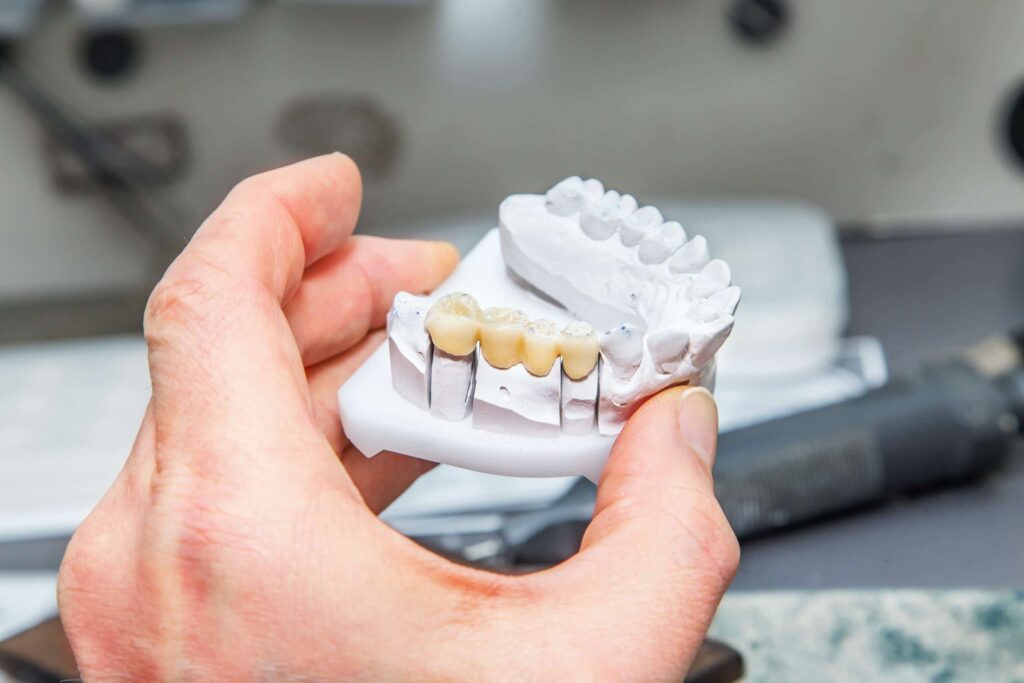

Losing a tooth changes more than your smile. The gap left behind can shift how your mouth functions, and it affects the stability of surrounding teeth. A dental bridge fills that space and restores chewing function.Because it replaces the missing tooth, it also helps keep your remaining teeth properly aligned. Here’s how bridges work to support oral health and improve your bite:
Understanding Dental Bridge Structure
A dental bridge is a fixed restoration that replaces one or more missing teeth. The name describes its purpose well, because the device spans the gap between two anchor points. Every bridge relies on two main components. The artificial tooth that fills the gap is the pontic, and the crowns that hold it steady are the abutments. These abutments attach to your natural teeth or to dental implants on either side of the space. Once your dentist secures the bridge, it stays in place permanently, so it does not lift out for cleaning the way a removable partial denture does.
Supporting Your Bite and Oral Health
Your teeth function as a coordinated unit, and each one helps the others stay aligned. When a tooth disappears, the neighboring teeth may drift toward the open space over time. This gradual movement alters the way your upper and lower teeth meet. A bridge holds those neighboring teeth in their correct positions.
Because the gap stays filled, your chewing forces spread more evenly across the arch, which can reduce uneven pressure on individual teeth. You also regain the surface area you need to bite and grind a wider variety of foods. An open gap may collect food particles and bacteria, and those trapped deposits make daily cleaning harder. A bridge closes the space and creates a smoother surface that you’re able to maintain more easily.
Caring for a bridge can be simple once you build the habit. Brush twice each day, and floss carefully around the bridge and beneath the pontic. Floss threaders and interdental brushes may reach spots that a standard brush misses. Schedule regular checkups, as these allow your dentist to monitor both the bridge and the teeth that support it.
Comparing Common Bridge Types
Several bridge designs exist, and the right one depends on the gap’s location and the condition of the surrounding teeth. Your dentist can recommend a specific option after a thorough examination. Options include:
- Traditional bridges: The most common design, anchored by crowns on the natural teeth that sit on both sides of the gap.
- Maryland bridges: Held by a framework bonded to the backs of adjacent teeth, which preserves more natural tooth structure.
- Cantilever bridges: Secured to a single natural tooth, used when teeth exist on only one side of the space.
- Implant-supported bridges: Attached to dental implants instead of natural teeth, often chosen when several teeth are missing.
Learn More About Dental Bridges
Receiving a bridge usually requires several visits. At the first appointment, your dentist reshapes the abutment teeth to make room for the crowns, then takes an impression that guides your custom bridge. A dental lab builds the permanent piece while you wear a temporary bridge that protects the prepared teeth. During the final appointment, your dentist removes the temporary bridge and checks the fit of the permanent one. After confirming your alignment and bite, the dentist cements the bridge into position, and the restoration becomes a stable part of your mouth. A dental bridge offers a practical way to replace missing teeth and protect your oral health, so talk with your dentist about whether one suits your situation.
